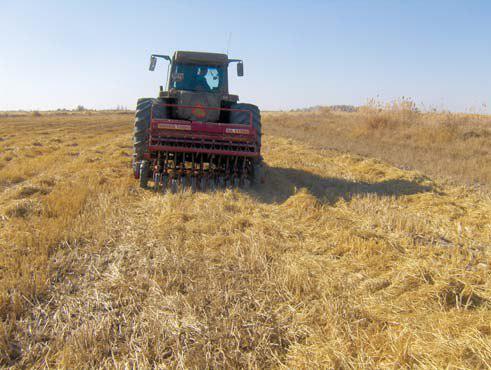
Consequences of climate change: soil erosion and how to combat it. The technology of soil-saving agriculture, effectively used in world practice, has recently attracted great interest among agricultural scientists and farmers of Uzbekistan as the most sustainable, resource-saving technology. One of the main techniques of soil conservation agriculture technology is the preservation of plant residues on the soil surface, that is, the creation of a mulch cover. For the most complete soil coverage, at the beginning of the use of no-till technology, it is necessary to cultivate crops such as wheat, triticale, rye, barley, which, after harvesting, leave a significant part of the above-ground biomass on the field. Studies have shown that the preservation of wheat straw and stubble on the soil surface reduces the seasonal accumulation of salts by 1.6-4 times compared to a site without the preservation of plant residues. This technique also helps conserve soil moisture. The biological activity of the soil is one of the most important indicators of soil fertility. Zero seeder planting in Karakalpakstan on top of crop residues, which covers the soil, prevents wind erosion, retains moisture and, when decomposed, creates humus to increase the biological activity of the soil. Economic analysis has shown that with zero tillage, farmers' costs for cultivating row crops are reduced by 70-75% due to a reduction in mechanized field work and a reduction in water consumption for irrigation. The environmental benefits of mulching include the reduction of greenhouse gas emissions into the atmosphere by sequestering carbon and nitrogen in the soil, which also helps to increase soil flora and fauna. However, the lack of seeders for zero sowing and low yields in the first years may be a limiting factor. Work in this direction continues at the demonstration field of the JCC Zhaihun in Karakalpakstan. Farmers are increasingly convinced that this method is effective for farming in conditions of low water supply caused by climate change.
Consequences of climate change: soil erosion and how to combat it.