When discussing environmental issues, we most often focus on the consequences: river pollution, a shortage of safe drinking water, industrial accidents, or the effects of climate change. But a modern approach to environmental protection is built differently—it helps prevent risks before they become a problem.
This approach is now gradually being implemented in Uzbekistan’s environmental policy. This is no longer just a matter of individual environmental initiatives, but of creating a unified system that integrates drinking water quality, sanitation, public health, industrial safety, and adaptation to climate change.
For such a system to truly work, more than just plans and strategies is needed. Clear goals, specific deadlines, measurable indicators, and a clear division of responsibility are essential. National targets for water, sanitation, hygiene, and health are becoming a key tool. They define the country’s plans to achieve in the coming years, who is responsible for achieving them, and the metrics by which progress will be assessed. For example, the proposed targets include achieving 100% coverage of the urban population and 82% coverage of the rural population with centralized water supply services by 2036, compared to the current coverage of 81% (2024) nationwide.
Industrial safety remains an equally important area. For Uzbekistan and other Central Asian countries, preventing accidents at potentially hazardous facilities, including tailings ponds, is directly linked to the protection of water resources and human safety. Therefore, issues of early warning, monitoring, and interaction between various agencies are becoming part of the overall environmental risk management system.
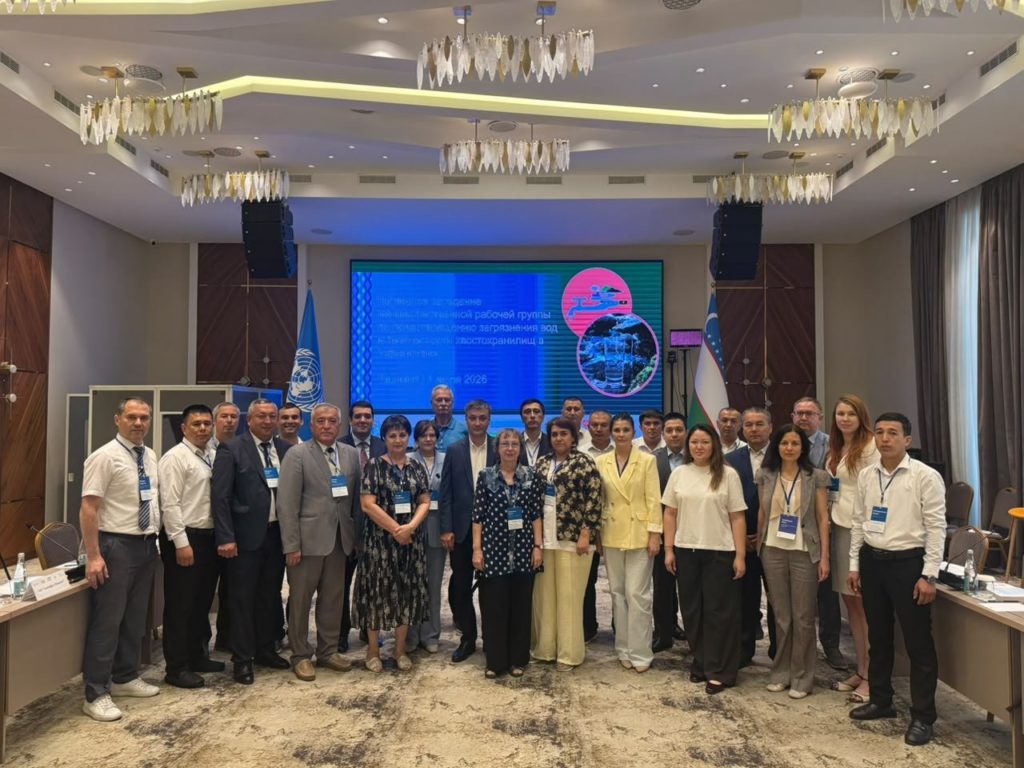
These topics were the central themes at events held on June 30 and July 1 in Tashkent as part of the UNECE project “Strengthening Water Supply, Sanitation, and the Protection of Water Resources from Accidental Pollution in the Context of Climate Change,” implemented with the support of the Swiss Agency for Development and Cooperation (SDC).
The project helps Uzbekistan implement international approaches to water resources management and strengthen its national environmental and industrial safety system. This work also contributes to the implementation of the Protocol on Water and Health, which Uzbekistan became the first country in Central Asia to accede to in 2023. Over the past year, in preparation for accession to the UNECE Convention on the Transboundary Effects of Industrial Accidents, national legislation has been assessed, key documents have been prepared, and further steps to improve the industrial accident prevention system have been identified.
More about the project:
UNECE project page
Environmental safety begins long before an accident.