Ecological Resource Center “EKOMAKTAB”
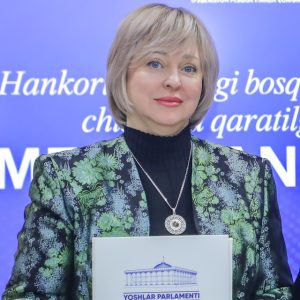
Natalya Sergeevna Shivaldova is the leader of the Ekomaktab Eco-Resource Center, having devoted more than 20 years to nature protection and the development of the environmental movement.
Over the years, Ekomaktab has become one of the country’s leading environmental organizations, bringing together experts, volunteers, and thousands of caring people to preserve natural heritage for future generations. The organization actively participates in the implementation of international environmental conventions on biodiversity conservation, wildlife protection, waste management, and combating desertification and climate change.
of work in the field of ecology
implemented environmental projects
nature reserves and national parks received support
of waste collected and processed
Organization Activities
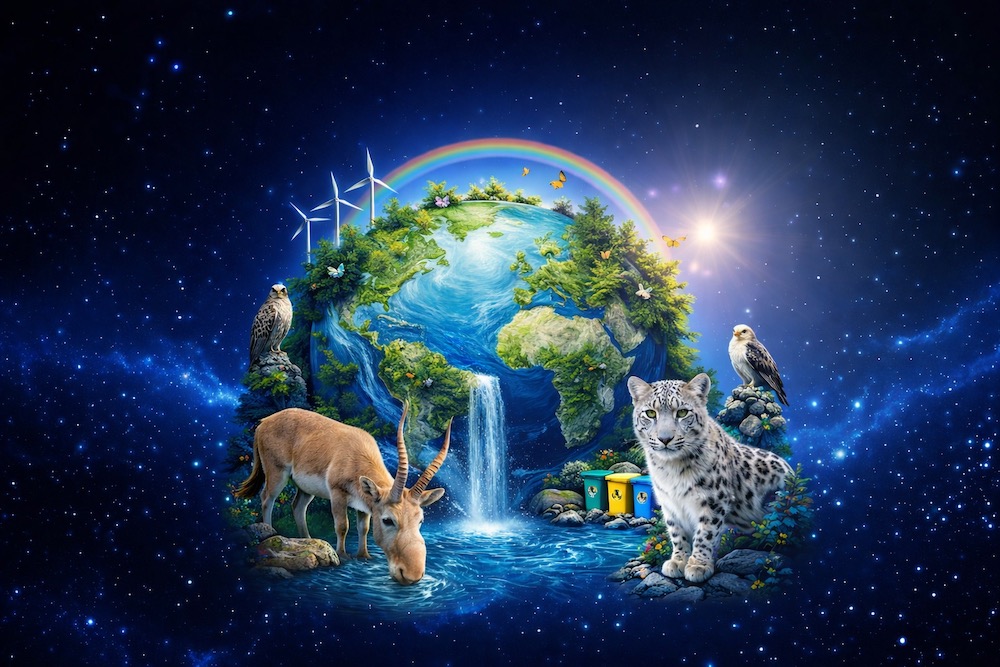
The organization has implemented more than 50 environmental projects and provided technical, expert, and methodological support to 12 nature reserves and national parks, strengthening the protection of the snow leopard, saiga, gazelle, Bukhara deer, and other unique representatives of Uzbekistan’s fauna.
Under Natalya Sergeevna’s leadership, more than 3,000 trees have been planted and mountain forest restoration work has been carried out. Every year, environmental clean-up campaigns are organized in natural areas. As a result, more than 10 tons of waste have been collected and processed.
Experts from the Ekomaktab Republican Eco-Resource Center were among the authors and initiators of the moratorium on cutting down green spaces in Tashkent and are also the authors of the “Green Belt of Tashkent” initiative.
The organization pays special attention to working with local communities near protected areas, environmental education, and engagement with children and young people. Every year, eco-tourism camps are organized in Chimgan for children from low-income families.
Projects Implemented from 2020 to 2025
| No. | Project | Description / contribution | Period |
|---|---|---|---|
| 1 | “Methodologies and technologies for forest restoration through the involvement of local natural resource users and support for active environmental education”. Implemented with WWF support |
Support in implementing Presidential Resolution No. PP-4850 of October 6, 2020, “On approval of the Concept for the Development of the Forestry System of the Republic of Uzbekistan until 2030”. Assistance in fulfilling obligations under the Convention on Biological Diversity. | 2020-2022 |
| 2 | Volunteer project “Revival of the Chimgan Forest and Protection of Mountain Forests”. | Tree planting on the slopes of the Chimgan Gorge and work with the population in the village of Chimgan. | 2020-2022 |
| 3 | “Engaging stakeholders in solving problems related to uranium legacy in Central Asia. Phase II” Joint project with the State Committee for Nature Protection of Uzbekistan and the OSCE Project Coordinator in Uzbekistan |
Working with local communities to prepare the reclamation cycle for uranium tailings in Chorkesar and Yangiabad. Assistance in fulfilling Uzbekistan’s obligations under the Basel and Stockholm Conventions. Promotion and popularization of the Aarhus Convention in Uzbekistan. |
2021-2022 |
| 4 | “Sustainable and Smart Waste for the HORECA Sector”. Coca-Cola Foundation | Work on collecting plastic at catering points in Tashkent. Assistance in fulfilling Uzbekistan’s obligations under the Basel Convention. |
2022-2023 |
| 5 | “Understanding the dynamics and trends of illegal trade in wild animals intended for the pet trade in Central Asia”. Partner: TRAFFIC International (“TRAFFIC”) |
Research into illegal trade and markets involving fauna species and rare exotic species listed under CITES and the Red Book of Uzbekistan. Assistance to state institutions in fulfilling obligations under the Convention on Biological Diversity. |
2024-2025 |
| 6 | “Strengthening capacity to combat wildlife crime in Central Asia”. Partner: Fauna & Flora International | Work to strengthen the capacity of customs authorities, border troops, and the Ministry of Internal Affairs in combating illegal trade in wild flora and fauna. Experts of the Ekomaktab NGO created the platform https://yashiltamojnya.uz. Assistance to state authorities in fulfilling obligations under CITES. |
2022-2025 |
| 7 | “Expanding the impact of strengthened political will and law enforcement measures to combat wildlife trafficking in Central Asia”. Partner: FAUNA & FLORA INTERNATIONAL | Support for the cynological services of the Customs Committee in training detection dogs to identify flora and fauna objects at customs. Improving customs officers’ skills in identifying fauna species, their parts, and derivatives at customs checkpoints. Assistance to state authorities in fulfilling obligations under CITES. |
2025 |
| 8 | “Plastic waste in remote and mountainous areas of Tashkent region and ensuring its environmentally sound management”. Implemented under the UNEP environment programme with the support of the Basel Convention Secretariat, the Ministry of Ecology of Uzbekistan, and the State Center for Environmental Expertise. | Rational waste management in natural areas along intensive tourist routes and recreational zones. Study of ecosystem service potential and opportunities to involve local communities in managing waste left by tourists. Promotion of environmental culture basics. Installation of art-object containers for waste collection. Assistance to state institutions in fulfilling obligations under the Basel Convention. |
May-November 2025 |
| 9 | “Support for civil society in promoting human rights and democracy in the regions of Uzbekistan” The project was implemented jointly with the public association “Yuksak Salohiyat”, the NGO Eco-Resource Center “EKOMAKTAB”, the NGO “Association of Volunteers of Uzbekistan”, and “CGE – Soziokulturelle initiative Erfurt”, with financial support from the European Union. |
The project aims to support education in human rights and environmental rights among young people in Uzbekistan, as well as topics related to a healthy environment. Training of trainers and youth leaders to engage the population in solving environmental problems and decision-making. |
March 2023 – November 2025 |
| 10 | Since 2013, activities have been carried out in saiga habitats in Ustyurt/Karakalpakstan. “Project on preventing and reducing poaching among the population. Organization of Steppe Clubs based in schools of the Kungrad and Muynak districts”. Implemented with support from the Saiga Conservation Alliance. | Work with local communities, children, and youth. Technical assistance to protected areas such as Saigachiy, Southern Ustyurt, and others. SMART patrol training for staff of protected natural areas. |
From 2013 to the present |
| 11 | The platform https://yashiltamojnya.uz was created by experts of the Ekomaktab NGO | For customs officers, to speed up the identification of fauna species. Assistance to state authorities in fulfilling obligations under CITES. |
2024-2025 |
| 12 | Volunteers of the Ekomaktab NGO organize “Green Schools in Nature”, “Kindness Lessons in the Open Air”, tourist rallies for children and youth, and free ecological camps. | Volunteers of the Ekomaktab NGO organize “Green Schools in Nature”, “Kindness Lessons in the Open Air”, tourist rallies for children and youth, and free ecological camps for children from low-income families. | From 2005 to the present day |
| 13 | “Friends of the Gazelle” project. Supported by the Ministry of Ecology, Environmental Protection, and Climate Change. | Educational work at the gazelle breeding center in Bukhara region. Children’s and youth environmental expeditions. Press tours for journalists. Development of ecological tourism. Assistance to state institutions in fulfilling obligations under the Convention on Biological Diversity. |
From 2016 to the present day |